
IBISWorld Platform
Answer any industry question in minutes with our entire database at your fingertips.

IBISWorld forecasts the value of merchandise trade exports to rise by 2.8% in 2025-26, to an estimated $527.0 billion. This rise is driven largely by resilient resource prices and robust output, which is expected to contribute to a recovery in resource exports in 2025-26. A rally in gold, copper and lithium prices in late 2025 is also expected to drive export values. Tensions and conflicts in the Middle East have caused a temporary surge in coal prices in March 2026, offsetting the expected slump in coal exports in 2025-26. According to the Australian Bureau of Agricultural and Resource Economics and Sciences (ABARES), agricultural exports are expected to rise thanks to growers delivering the second-largest winter crop on record. Robust demand for Australian beef, thanks to low US beef supply and trade tensions between the US and China is also expected to support beef exports. These factors are expected to contribute to the rise in merchandise trade exports in 2025-26.Over the past five years, the value of merchandise trade exports has risen, driven by a beneficial global context and growth in domestic production volumes. Mining and agricultural commodities compose the bulk of Australian exports, which means that trends in these sectors dictate the value of merchandise trade exports in Australia. Global supply shocks, driven by a stretched global supply chain and the Russia-Ukraine conflict, led to a surge in demand for Australian mining and agricultural exports. In particular, the value of wheat and LNG exports soared, as many countries scrambled to replace energy and agricultural commodities that were traditionally sourced from Russia or Ukraine. These limitations to global supplies drove up the price of commodity exports in Australia, especially for mining commodities like iron ore and coal, which account for a high proportion of export value. These factors caused the value of merchandise trade exports to peak in 2022-23. As global supply chain conditions improved, commodity prices eased and export values slumped over the two years through 2024-25. However, a rally in key commodity prices like gold and copper, which started in late 2025, will support export values in 2025-26. Conflicts in the Middle East have also provided a temporary boost in coal prices and export values.Within the agriculture sector, many categories have exhibited strong export growth over recent years, buoyed by beneficial prices and record production. Heavy rainfall and bumper crops have contributed to consecutive years of record production volumes in key agricultural commodities in the past few years. A combination of elevated prices and production volumes caused a surge in the contribution of agricultural products to the value of merchandise trade exports over the past five years.Despite domestic manufacturers generally lacking in export price competitiveness, export demand for Australian food and live animals has increased significantly over recent years. Exports of raw produce and manufactured food products have been boosted by the burgeoning Asian middle classes, particularly within China, as Australian products are often viewed as premium alternatives in these markets. Trade tensions and barriers between the United States and China have also prompted many Chinese consumers to shift their preference from US beef to Australian beef, supporting export growth. Notably, DAFF data show that total beef exports reached 1.5 million tonnes in 2025, highlighting rising demand for Australian beef. Overall, IBISWorld forecasts the value of merchandise trade exports to increase at a compound annual rate of 5.9% over the five years through 2025-26.
Curious about what drives these trends? IBISWorld's analyst coverage on the value of merchandise trade exports includes detailled analysis on the current performance, outlook and industries affected.
1970-2033
This report analyses the value of Australia's exported merchandise. The data for this report is sourced from the Department of Foreign Affairs and Trade (DFAT) and the Australian Bureau of Statistics (ABS) and is measured in billions of current Australian dollars.
IBISWorld Industry Reports are available in multiple formats to fit seamlessly into your workflow.

Answer any industry question in minutes with our entire database at your fingertips.
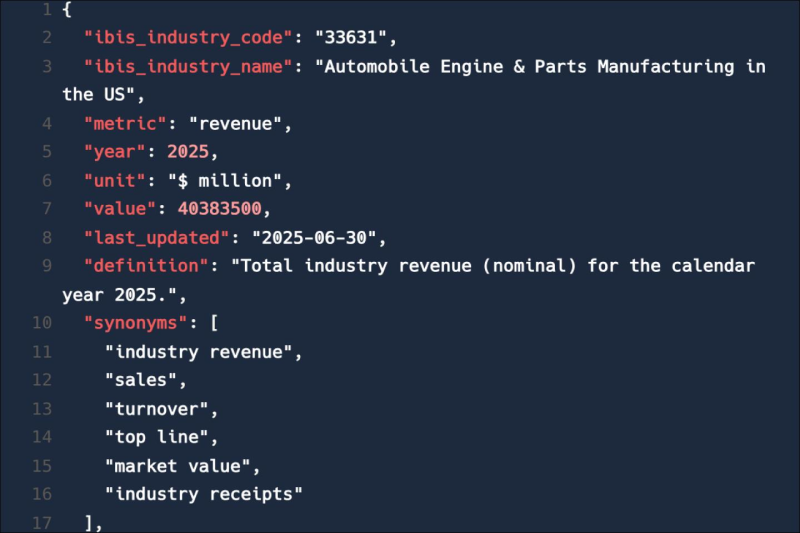
Feed trusted, human-driven industry intelligence straight into your platform.
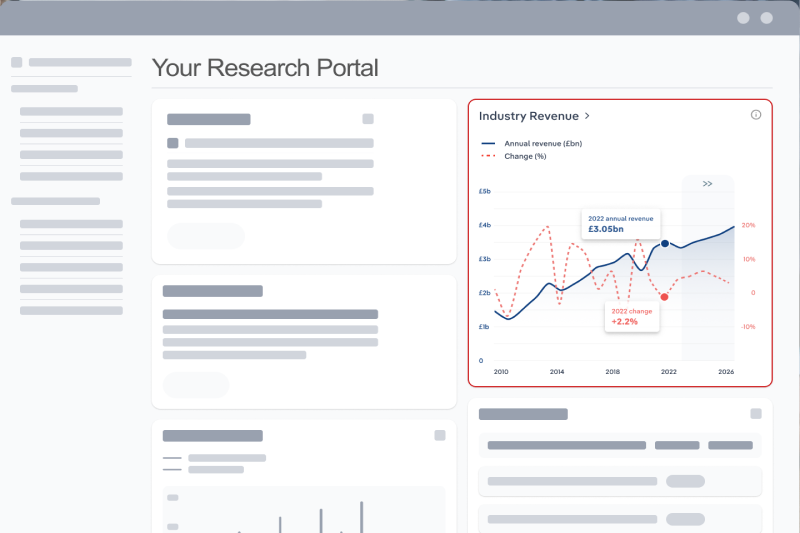
Streamline your workflow with IBISWorld’s intelligence built into your toolkit.
Explore industries with similar markets, supply chains, and economic drivers to gain broader context and insights.
| Industry | Country | Last 5-yr CAGR | Forecast 5-year CAGR | Revenue |
|---|---|---|---|---|
| Customs Agency Services in Australia |

|
XX% | XX% | $XX |
| Customs Agency Services in Australia |
|
XX% | XX% | $XX |
When the stakes are high, you need intelligence that cuts through the noise—wherever you work.
The value of merchandise trade exports in Australia in 2026 was $527 billion.
The value of merchandise trade exports in Australia grew by 5.94% in 2026.
IBISWorld’s data and analysis on value of merchandise trade exports in Australia includes forecasted growth rates over the next five years.