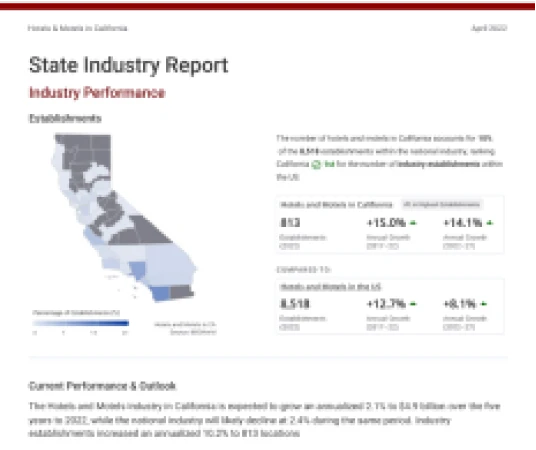

About the Residential Intellectual Disability Facilities in Georgia Market Research Report
What’s Included in the Residential Intellectual Disability Facilities in Georgia Market Research Report
Definition of the Residential Intellectual Disability Facilities in Georgia?
This industry primarily houses and tends to the daily needs of individuals diagnosed with intellectual and developmental disabilities. Industry providers focus on providing room and board, protective supervision and counseling. Also, some form of healthcare may be provided at industry facilities.
What’s included in the Residential Intellectual Disability Facilities in Georgia?
The Residential Intellectual Disability Facilities in Georgia includes services for residents disgnosed with mild idd, services for residents disgnosed with moderate idd, services for residents disgnosed with severe idd and services for residents disgnosed with profound idd. Related terms covered in the Residential Intellectual Disability Facilities in Georgia industry report includes a life-long disability attributable to mental, physical or a combination of impairments manifested before age 18, a generalized disorder characterized by significantly impaired cognitive functioning and deficits in two or more adaptive behaviors with onset before the age of 18, intellectual and developmental disability, people with both intellectual disability and another developmental disability or a group that includes people with an intellectual disability or another developmental disability, icf/iid stands for intermediate care facilities for individuals with intellectual disabilities. these facilities generally cater to individuals with a variety of developmental disorders, not just intellectual disabilities. the specific naming might be different in different legislation, jurisdictions or contexts, home and community-based services (hcbs) provide opportunities for medicaid beneficiaries to receive services in their own home or community instead of an institution, public residential facility. large institutions operated by the state, home to individuals with idd, serving 16 or more individuals, long-term support and services (ltss) are a range of services provided at home, in the community, or in facilities that help older adults and people with disabilities with daily activities and health-related needs when they can’t fully care for themselves and a home- and community-based services (hcbs) waiver is a program that allows states to use medicaid funds to provide services to individuals with disabilities or chronic illnesses outside of institutional settings.
Industry Performance of the Residential Intellectual Disability Facilities industry in Georgia
Benchmark the Residential Intellectual Disability Facilities in Georgia industry performance with all GA county and national performance.
Residential Intellectual Disability Facilities in Georgia
#28 in Highest Revenue 0.9% of state's GDPRevenue (2026)
Annual Growth (2021-26)
Annual Growth (2026-31)
Residential Intellectual Disability Facilities in the US
Revenue (2025)
Annual Growth (2020-25)
Annual Growth (2025-30)
For the full list of industry drivers, see report purchase options.
Key Drivers of the Residential Intellectual Disability Facilities industry in Georgia
See how key industry drivers, such as population, new business formation, per capita disposable income, number of adults aged 65 and older, federal funding for medicare and medicaid and per capita disposable income are impacting Residential Intellectual Disability Facilities in Georgia
Georgia Economic Indicators
Population
New Business Formation
Per Capita Disposable Income
View more economic information in GA State Economic profile
US Key External Drivers
Number of adults aged 65 and older
Federal funding for Medicare and Medicaid
Per capita disposable income
For the full list of industry drivers, see report purchase options.
County Data of the Residential Intellectual Disability Facilities industry in Georgia
Access proprietary data on county in the Residential Intellectual Disability Facilities in Georgia, such as Fulton County, Dekalb County and Lowndes County. Data includes figures on revenue, establishments, employees and wages by counties.
Key Statistics of the Residential Intellectual Disability Facilities industry in Georgia
Download 19 years of historical data and 5 years of projected performance.