
IBISWorld Platform
Answer any industry question in minutes with our entire database at your fingertips.

IBISWorld forecasts the trade-weighted index to fall by 1.5% in 2026-27, to 66.8 index points. This expected dip extends the prior year's decline and leaves the New Zealand dollar near its weakest levels over the past decade. Weakness has carried into the first quarter of 2026-27, with the index down around 3.1% year-on-year across April to June 2026. The recent currency weakness reflects the Reserve Bank of New Zealand's easing cycle, which kept the Official Cash Rate (OCR) at 2.25% from late 2025 to May 2026. This trend has widened the interest rate differential against New Zealand's major trading partners, like Australia. However, this gap is expected to narrow, as the Reserve Bank of New Zealand lifted the OCR by 25 basis points in July 2026 and signalled the potential for further rate hikes to bring inflation down to 2% in its July Monetary Policy Review. The rate hike is the central bank's first since May 2023, and is expected to provide modest support against the US and Australian dollars for the remainder of the year. With the central bank now tightening the monetary policy, the downside risk to the trade-weighted index is expected to be relatively limited, leaving the soft start to the year as the main drag on the annual average.Fluctuations in the trade-weighted index are highly dependent on global forces and the actions of other central banks. A key driver behind the decline in the TWI has been the divergence between New Zealand's monetary policy and that of its trading partners. The Reserve Bank of New Zealand aggressively eased rates, cutting the Official Cash Rate (OCR) from 5.5% in July 2024 to 2.25% by November 2025, one of the fastest easing cycles among developed central banks. In contrast, the US Federal Reserve and the Reserve Bank of Australia (RBA) have maintained a more measured approach amid persisting inflation pressures. The RBA had also lifted the cash rate at three consecutive meetings from February 2026 through May 2026, its first increases since November 2023. When domestic interest rates are substantially lower than those available in major trading partner currencies, investors have less incentive to hold New Zealand dollar assets, creating pressure on the exchange rate downwards. The labour market has also deteriorated, with unemployment remaining above 5.0% since the December 2024 quarter through March 2026, reaching a decade-high of 5.4% in the December 2025 quarter. A softer labour market signals spare capacity in the economy, which tends to weigh on the currency by encouraging a more cautious monetary policy stance. Still, an upwards trend in the value of New Zealand exports, particularly for dairy exports, has provided some support for the NZD.In 2021-22, the RBNZ responded earlier than many other central banks to a global rise in inflation. This attracted investors to the New Zealand dollar, seeking to capitalise on interest rate differentials and temporarily inflated the trade-weighted index. In 2022-23, concerns about global inflation heavily weakened the New Zealand dollar. As central banks around the world hiked interest rates, investors flocked to invest in US Dollars at the expense of riskier currencies, like the New Zealand dollar. This development contributed to a sharp drop in demand for the New Zealand dollar in 2022-23. These declines were moderated by the reopening of the Chinese economy, a key trade partner for New Zealand. Aggressive cuts to the cash rate during 2024-25 and 2025-26, rising unemployment figures, New Zealand's Real GDP declining during 2024-25 for the first time since 2008-2009, and overall high interest rate differentials have contributed to the depreciation of the NZD and further declines in the TWI. Overall, IBISWorld forecasts the trade-weighted index to decline at a compound annual rate of 2.0% over the five years through 2026-27.
Curious about what drives these trends? IBISWorld's analyst coverage on the trade-weighted index includes detailled analysis on the current performance, outlook and industries affected.
1985-2034
This report analyses New Zealand's trade-weighted index (TWI), which measures the value of the New Zealand dollar against the currencies of 17 of New Zealand's major trading partners. The group of currencies is weighted based on the level of trade with each country. The weights are calculated annually and typically take effect in December. The five most heavily weighted currencies in the index for 2026 are the Chinese renminbi (21.5%), Australian dollar (17.8%), US dollar (16.2%), the Euro (9.2%) and the South Korean won (4.8%). The data for this report is sourced from the Reserve Bank of New Zealand (Te Putea Matua) and is presented as an average index over each financial year.
IBISWorld Industry Reports are available in multiple formats to fit seamlessly into your workflow.

Answer any industry question in minutes with our entire database at your fingertips.
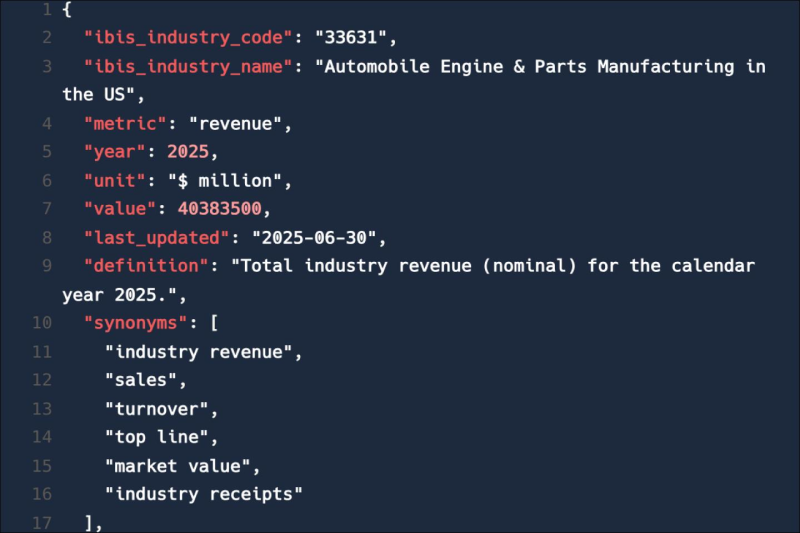
Feed trusted, human-driven industry intelligence straight into your platform.
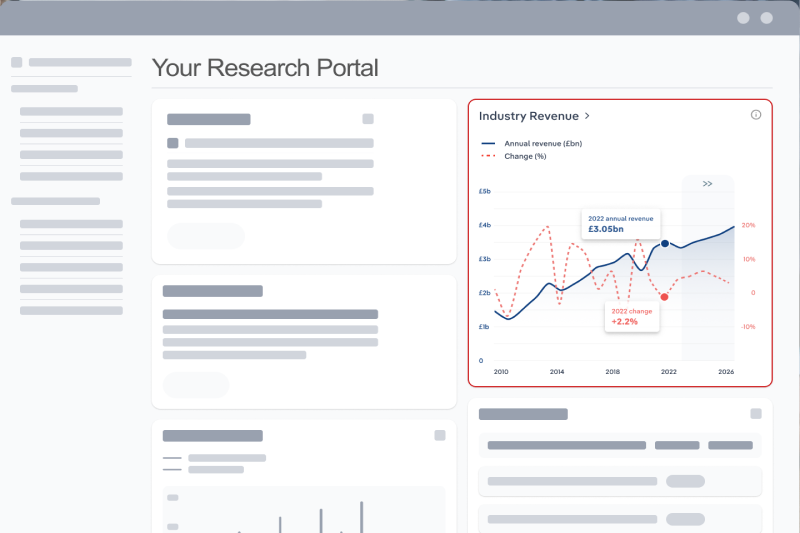
Streamline your workflow with IBISWorld’s intelligence built into your toolkit.
Explore industries with similar markets, supply chains, and economic drivers to gain broader context and insights.
When the stakes are high, you need intelligence that cuts through the noise—wherever you work.
The trade-weighted index in New Zealand in 2027 was 66.8 index points.
The trade-weighted index in New Zealand declined by -2.03% in 2027.
IBISWorld’s data and analysis on trade-weighted index in New Zealand includes forecasted growth rates over the next five years.