Mobile Menu

Meat Processing in Europe - Market Size, Industry Analysis, Trends and Forecasts (2025-2030)

EU-C101 September 2025 Spotlight Report

Revenue

€376.3bn

2020-2025 1.1 %
2025-2030 X.X %

Employees

2m

2020-2025 5.1 %
2025-2030 X.X %

Businesses

48,237

2020-2025 0.1 %
2025-2030 X.X %

Wages

€XX.Xbn

2020-2025 X.X %
2025-2030 X.X %

Meat Processing in Europe industry analysis

The Meat Processing and Preserving industry in Europe has faced several challenges over the past five years despite receiving government support. Over the five years through 2025, revenue is forecast to inch upwards at a compound annual rate of 1.1%. Europe’s meat sector faces mounting pressure from shifting demand, tighter supply, and rising costs. Health and sustainability concerns are eroding red meat consumption, while plant-based alternatives grew fivefold between 2011 and 2023. Southern markets such as Spain and Portugal remain culturally attached to meat, but Northern Europe is shifting faster towards alternatives. Affordability has become the decisive factor. With living costs high, consumers are trading down to pork and poultry, valued for versatility and relative affordability. Even wealthier households are cutting back, squeezing processor margins and weakening demand for premium cuts.Exports now provide a buffer. In Q1 2025, the EU shipped 1.12 million tonnes of pigmeat worth €3.14 billion (+3% volume, +2.7% value), with China and the UK as top buyers, Eurostat notes. But beef is retreating: output is forecast to fall 1.3% in 2025 while imports from Brazil and Argentina rise. Adding to pressures, processors face herd contraction, labour shortages, and high energy costs, pushing many to invest in automation, renewables, and value-added lines to protect profitability. In 2025, revenue is expected to dip 0.7% to €376.3 billion while profit is expected to reach 5.1% of revenue, a drop from 5.8% in 2020 thanks to cost pressures. Looking ahead, Europe’s meat processors face a challenging landscape. Over the five years through 2030, revenue is slated to grow at a compound annual rate of 3.3% to €442.3 billion, and profit is expected to reach 7.5% of revenue. The looming shadow of eco-consciousness will stifle meat demand, with the OECD projecting EU per-capita consumption will fall by 1.6 kg by 2035. Faced with swelling competition from alternative proteins, traditional meat processors will seek innovative strategies to retain market share. Still, meat's engrained cultural value in European societies will offer some relief. Traditional meals, culinary heritage involving meat and strong demand for locally-sourced produce will serve to protect meat processors’ sales over the coming years. Supply chains face added pressure from regulation. The EU Deforestation Regulation (EUDR), effective December 2025, will require geolocation tracking for all beef and leather holdings, with non-compliance risking fines of up to 4% of turnover. Meanwhile, the new EU packaging law adds costs, requiring recyclable formats and higher recycled content. Despite the subdued outlook, opportunities remain. The CAP 2025 reform shifts subsidies towards smallholders and young farmers while tightening import standards, creating cost risks for scale players but potentially strengthening rural networks.

European coverage with a localised twist

  • Market estimates from 2015-2030
  • Detailed reports analysing industry performance, market dynamics and company data, compared across countries
  • PDF report or online database with Word, Excel and PowerPoint export options
  • 100% money back guarantee
Purchase options Download sample

About Spotlight Reports

Industry Statistics and Trends

Meat Processing in Europe key trends

European meat processors struggle in the face of persistent inflation.


Swelling input costs forced processors to pass on price hikes to consumers, who were already choosing to spend less on meat.

Rising eco-consciousness stifles demand for traditional meat.


The cultural significance of meat in Europe will somewhat sustain sales and stave off competition from alternative proteins.

Access all insights and trends with purchase. View purchase options.

Meat Processing in Europe

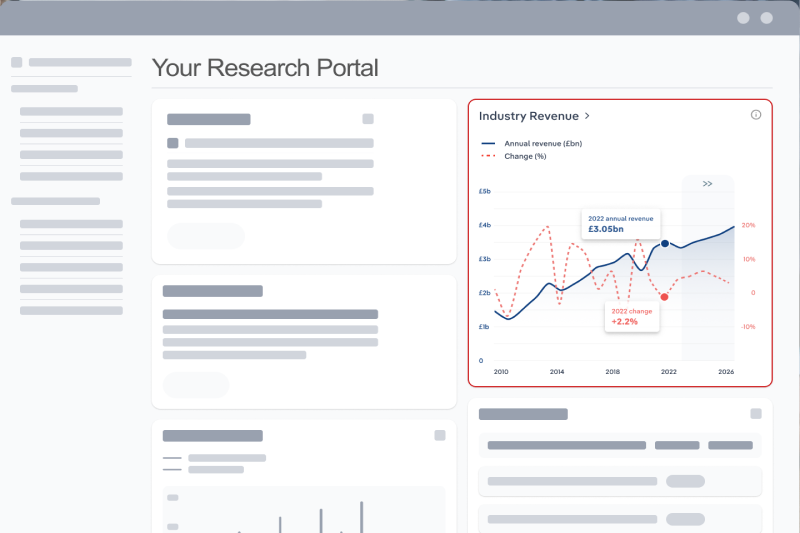
Industry Revenue

Total value and annual change from 2012-2030. Includes 5-year outlook.

Access the 5-year outlook with purchase. View purchase options

Meat Processing in Europe market size (2020-2025)

Industry revenue has grown at a CAGR of 1.1 % over the past five years, to reach an estimated €376.3bn in 2025.

Trends and Insights

Europe’s meat sector faces structural decline amid health and sustainability scrutiny

  • Consumer scrutiny over health and sustainability is intensifying - red meat is increasingly linked to cardiovascular and cancer risks, particularly among younger buyers and per capita EU meat consumption has already slipped from 69 kg in 2018 to 66 kg in 2024, the European Commission notes. Country trends diverge sharply: Cyprus (88 kg), Ireland (87 kg), Portugal and Spain (85 kg) remain well above the EU average, while Germany lags at just 53 kg. In parallel, plant-based alternatives expanded fivefold between 2011 and 2023, underscoring a structural tilt in diets.

Access all 17 market size insights and trends with purchase. View purchase options.

Meat Processing in Europe outlook (2025-2030)

Market size is projected to grow over the next five years.

Health concerns reshape EU meat demand, driving reformulation and diversification

  • While overall meat consumption in Europe has edged down only gradually, cultural traditions in Southern and Western Europe such as Spain’s cocido, Italy’s ragù, and France’s steak-fries—still underpin relative stability. But beneath this resilience, consumer sentiment is shifting. Red meat, particularly beef, is increasingly associated with cardiovascular disease, type 2 diabetes, and cancer in public discourse. Younger and health-conscious buyers are leading the shift and the OECD projects EU per capita meat consumption will fall by 1.6 kg by 2035.

Access all 12 forward-looking insights and industry data forecasts with purchase. View purchase options.

Revenue

€376.3bn

2020-2025 1.1 %
2025-2030 X.X %

Employees

2m

2020-2025 5.1 %
2025-2030 X.X %

Wages

€XX.Xbn

2020-2025 X.X %
2025-2030 X.X %

European Leaders & Laggards

Europe Job Growth CAGR: 5.1 % *
  • Job Growth

Top 5 Countries

  1. Serbia +20.6%
  2. Switzerland +17.6%
  3. Romania +5.2%
  4. Ireland +5.2%
  5. Iceland +5.2%

Bottom 5 Countries

  1. Bosnia & Herzegovina -3.7%
  2. Malta -1.6%
  3. Sweden -0.8%
  4. Luxembourg -0.1%
  5. Denmark +0.1%

* CAGR values are for the years 2020-2025.

Explore all 37 country performance rankings and data sheets with your membership purchase.

Biggest companies in the Meat Processing in Europe

Company
Market Share (%)
2025
Revenue (€m)
2025
Profit (€m)
2025
Profit Margin (%)
2025
Groupe Bigard SA
6,461.0
168.5
2.6
Premium Food Group ApS & Co. KG
7,105.0
185.3
2.6
Bell Food Group
5,407.8
405.0
7.5

Access statistics and analysis on all 10 companies with purchase. View purchase options.

Meat Processing in Europe

Products & Services Segmentation

Industry revenue broken down by key product and services lines.

Access all segmentation data and analysis with purchase. View purchase options.

Top Questions Answered in this Report

Unlock comprehensive answers and precise data upon purchase. View purchase options.

What is the market size of the Meat Processing industry in Europe in 2025?

The market size of the Meat Processing industry in Europe is €376.3bn in 2025.

How many businesses are there in the Meat Processing industry in Europe in 2025?

There are 48,237 businesses in the Meat Processing industry in Europe, which has grown at a CAGR of 0.1 % between 2020 and 2025.

Has the Meat Processing industry in Europe grown or declined over the past 5 years?

The market size of the Meat Processing industry in Europe has been growing at a CAGR of 1.1 % between 2020 and 2025.

What is the forecast growth of the Meat Processing industry in Europe over the next 5 years?

Over the next five years, the Meat Processing industry in Europe is expected to grow.

What does the Meat Processing industry in Europe include?

Beef and Veal are part of the Meat Processing industry in Europe.

Which countries have the most businesses in the Meat Processing industry in Europe?

The European country with the most businesses in the Meat Processing industry is Russia.

How competitive is the Meat Processing industry in Europe?

The level of competition is moderate and increasing in the Meat Processing industry in Europe.

Related Industries

Unlock Holistic European coverage

Members get access to 450+ industries across Europe, including comparative data for 37 countries.

View purchase options

Or contact us for multi-user and corporate license options

Table of Contents

About this industry

Industry definition

Companies in this industry process livestock to produce red meat. They operate slaughterhouses, produce fresh, chilled or frozen meat as carcasses and cuts and produce by-products like rendered lard, tallow, offal and pulled wool. Industry participants also bone, preserve and pack meat.

Related Terms

CarcassDeboningCuringRednering

What's included in this industry?

BeefVealLambMuttonPorkPoultryRabbit

Companies

Groupe Bigard SAPremium Food Group ApS & Co. KGBell Food Group

Industry Code

ISIC 2006

101 - Processing and preserving of meat in Europe

View up to 10 companies with purchase. View purchase options.

Performance

Key Takeaways

Europe’s meat sector faces structural decline amid health and sustainability scrutiny

View more insights with purchase. View purchase options.

Revenue Highlights

Trends
  • Revenue
  • 2025 Revenue Growth
  • Revenue Volatility

Employment Highlights

Trends
  • Employees
  • Employees per Business
  • Revenue per Employee

Business Highlights

Trends
  • Businesses
  • Employees per Business
  • Revenue per Business

Profit Highlights

Trends
  • Total Profit
  • Profit Margin
  • Profit per Business

Current Performance

Charts
  • Revenue in the Meat Processing in Europe industry (2012 -2030)
  • Employees in the Meat Processing in Europe industry (2012 -2030)
  • Business in the Meat Processing in Europe industry (2012 -2030)
  • Profit in the Meat Processing in Europe industry (2012 -2030)
Analysis

What's driving current industry performance in the Meat Processing in Europe industry?


Outlook

Analysis

What's driving the Meat Processing in Europe industry outlook?


Volatility

Analysis

What influences volatility in the Meat Processing in Europe industry?

Charts
  • Industry Volatility vs. Revenue Growth Matrix

Life Cycle

Analysis

What determines the industry life cycle stage in the Meat Processing in Europe industry?

Charts
  • Industry Life Cycle Matrix

Products and Markets

Highlights

Trends
  • Largest Market
  • Product Innovation

Key Takeaways

Pork is the top revenue generator for meat processors in Europe. The variety of pork products on offer fuels strong demand for pork, while health concerns around beef limit it to second place.

View more insights with purchase. View purchase options.

Products and Services

Charts
  • Products and Services Segmentation
Analysis

How are the Meat Processing in Europe industry's products and services performing?

Analysis

What are innovations in the Meat Processing in Europe industry's products and services?


Major Markets

Charts
  • Major Market Segmentation
Analysis

What influences demand in the Meat Processing in Europe industry?


International Trade

Highlights

  • Largest Importer
  • Smallest Importer
  • Total Imports into Europe
  • Largest Exporter
  • Smallest Exporter
  • Total Exports into Europe
Heat maps
  • Industry Concentration of Imports by Country
  • Industry Concentration of Exports by Country
Data Tables

Value and annual change (%) included

  • Number of Imports and Exports by European Country (2025)

Geographic Breakdown

Business Locations

Heat maps
  • Share of Total Industry Revenue by Region (2025)
  • Share of Total Industry Enterprises by Region (2025)
  • Share of Total Industry Employment by Region (2025)
  • Share of Total Industry Wages by Region (2025)

Industry Geographic Breakdown

Data Tables

Values and annual change provided for 37 European countries:

  • Revenue (2025)
  • IVA (2025)
  • Enterprises (2025)
  • Employment (2025)
  • Exports (2025)
  • Imports (2025)

Competitive Forces

Highlights

Trends
  • Concentration
  • Competition
  • Barriers to Entry
  • Substitutes
  • Buyer Power
  • Supplier Power

Key Takeaways

Market share concentration varies by country. Germany, France and the UK are much more concentrated than other European nations, since a few major players dominate in these countries.

View more insights with purchase. View purchase options.

Supply Chain

Charts

Buyer and supply industries

Companies

Market Share

Charts
  • Industry Market Share by Company (2020-2025)

Companies

Data Tables

Top 10 companies by market share:

  • Market share (2025)
  • Revenue (2025)
  • Profit (2025)
  • Profit Margin (2025)

Data Tables
  • Countries of operation for Groupe Bigard SA
  • Countries of operation for Premium Food Group ApS & Co. KG
  • Countries of operation for Bell Food Group
  • Countries of operation for Cranswick plc
  • Countries of operation for Vion NV
  • Countries of operation for Grupo Vall Companys SA
  • Countries of operation for Danish Crown AmbA
  • Countries of operation for Pilgrim Foods Ltd
  • Countries of operation for Westfleisch SCE mbH
  • Countries of operation for Hilton Food Group

External Environment

Highlights

Trends
  • Regulation & Policy
  • Assistance

Key Takeaways

Meat processors are subject to stringent regulations. Legislation covers aspects like food safety, animal welfare and environmental standards. It aim to ensure high-quality products, ethical practices and environmental sustainability.

View more insights with purchase. View purchase options.

External Drivers

Analysis

What demographic and macroeconomic factors impact the Meat Processing in Europe industry?

Financial Benchmarks

Highlights

Trends
  • Profit Margin
  • Average Wage
  • Largest Cost

Key Takeaways

Sustainable practices drive profit growth. A growing interest in ethically sourced, environmentally friendly options encourages processors to conserve waste and energy and allows them to raise prices.

View more insights with purchase. View purchase options.

Cost Structure

Charts
  • Share of Economy vs. Investment Matrix
  • Industry Cost Structure Benchmarks:
    • Marketing
    • Depreciation
    • Profit
    • Purchases
    • Wages
    • Rent
    • Utilities
    • Other
Analysis

What trends impact cost in the Meat Processing in Europe industry?


Key Ratios

Data tables
  • IVA/Revenue (2015-2030)
  • Imports/Demand (2015-2030)
  • Exports/Revenue (2015-2030)
  • Revenue per Employee (2015-2030)
  • Wages/Revenue (2015-2030)
  • Employees per Establishment (2015-2030)
  • Average Wage (2015-2030)

Country Benchmarks

European Leaders & Laggards

Data Tables

Top and bottom five countries listed for each:

  • Revenue Growth (2025)
  • Business Growth (2025)
  • Job Growth (2025)

European Country Performance

Data Tables

Rankings available for 37 countries. Statistics ranked include:

  • IVA/Revenue (2025)
  • Imports/Demand (2025)
  • Exports/Revenue (2025)
  • Revenue per Employee (2025)
  • Wages/Revenue (2025)
  • Employees per Establishment (2025)
  • Average Wage (2025)

Structural Comparison

Data Tables

Trends in 37 countries benchmarked against trends in Europe

  • Concentration
  • Competition
  • Barriers to Entry
  • Buyer Power
  • Supplier Power
  • Volatility
  • Capital Intensity
  • Innovation
  • Life Cycle

Key Statistics

Industry Data

Data Tables

Including values and annual change:

  • Revenue (2015-2030)
  • IVA (2015-2030)
  • Establishments (2015-2030)
  • Enterprises (2015-2030)
  • Employment (2015-2030)
  • Exports (2015-2030)
  • Imports (2015-2030)
  • Wages (2015-2030)

Methodology

Where does IBISWorld source its data?

IBISWorld is a world-leading provider of business information, with reports on 5,000+ industries in Australia, New Zealand, North America, Europe and China. Our expert industry analysts start with official, verified and publicly available sources of data to build an accurate picture of each industry.

Each industry report incorporates data and research from government databases, industry-specific sources, industry contacts, and IBISWorld's proprietary database of statistics and analysis to provide balanced, independent and accurate insights. 

IBISWorld prides itself on being a trusted, independent source of data, with over 50 years of experience building and maintaining rich datasets and forecasting tools.

To learn more about specific data sources used by IBISWorld's analysts globally, including how industry data forecasts are produced, visit our Help Center.