
IBISWorld Platform
Answer any industry question in minutes with our entire database at your fingertips.

IBISWorld forecasts the total value of merchandise trade to jump by 6.6% in 2025-26, to reach $1,015.4 billion. Growth in imports has been the primary driver of this uptick, as increased consumer demand, Australia's data-centre build-out and volatile fuel prices drive up import values. Data from the ABS shows capital goods imports rose by $3.4 billion in March 2026, representing a month-over-month jump of 36.8%. The continued AI infrastructure build-out in Australia has driven up import values, with automated data processing (ADP) hardware being a driver of capital goods imports. Conflicts in the Middle East have also driven up energy prices. As Australia heavily relies on overseas refined fuels, fuel imports are expected to boost total merchandise trade imports in the second half of 2025-26. Australia's exports heavily rely on the energy and resources sectors. As the prices of key commodities like gold, copper and lithium have rallied in late 2025, export values will follow suit, driving up the total value of merchandise trade. Strong demand for Australian beef and farmers delivering the second-largest winter crop on record are also expected to lift export and the total value of merchandise trade in 2025-26.Over the past five years, the total value of merchandise trade has exhibited strong growth thanks to several key trends. The volume and value of resource and commodity exports like iron ore, lithium, wheat and LNG have contributed significantly to export growth over the period. Supply chain disruptions from the Russia-Ukraine conflict propelled demand for Australian mining and agricultural exports. This supply shock also boosted commodity prices, further lifting Australia's export values over the past few years. As a result, many domestic producers have capitalised on the high commodity prices and ramped up production to meet rising consumer demand, causing the value of merchandise trade exports to peak in 2022-23. However, as supply disruptions eased, many commodity prices normalised, leading to a downturn in exports over the two years through 2025-26. In late 2025, a rally in commodity prices, including gold and copper, is forecasted to support export values through 2025-26, with the Middle East conflict also temporarily boosting coal prices and exports.The gradual deterioration of most manufacturing industries, driven by the rising competitiveness of foreign-produced goods and Australia's globally high wages, has led to a greater proportion of domestic consumption being met by imported products. One prevalent factor driving up import values is the closure of major Australian oil refineries like BP's Kwinana refinery in Western Australia and ExxonMobil's refinery in Victoria. In 2021, these refineries were shut down and converted into import terminals for refined fuel, constraining domestic refinery production from around 22,000 million litres in 2020-21 to just over 15,400 million litres in 2021-22. The constrained domestic capacity has propelled imports over the past few years, driving up the share of imports from major refined petroleum exporters, including Singapore and South Korea. Overall, IBISWorld forecasts the total value of merchandise trade to swell at a compound annual rate of 7.6% over the five years through the end of 2025-26.
Curious about what drives these trends? IBISWorld's analyst coverage on the total merchandise imports and exports includes detailled analysis on the current performance, outlook and industries affected.
1970-2033
This report analyses the total value of merchandise trade, which includes imports and exports of all types of goods measured by their Australian dollar value. The data for this report is sourced from the Department of Foreign Affairs and Trade (DFAT) and the Australian Bureau of Statistics (ABS) and is measured in billions of current Australian dollars.
IBISWorld Industry Reports are available in multiple formats to fit seamlessly into your workflow.

Answer any industry question in minutes with our entire database at your fingertips.
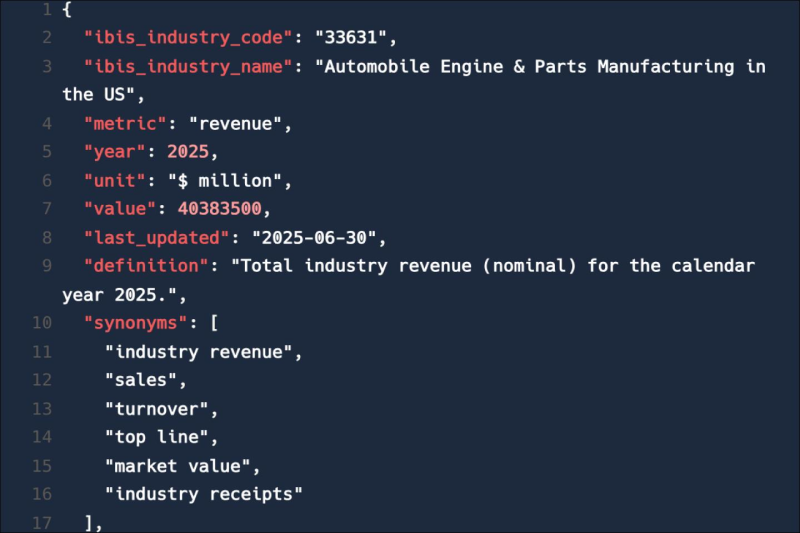
Feed trusted, human-driven industry intelligence straight into your platform.
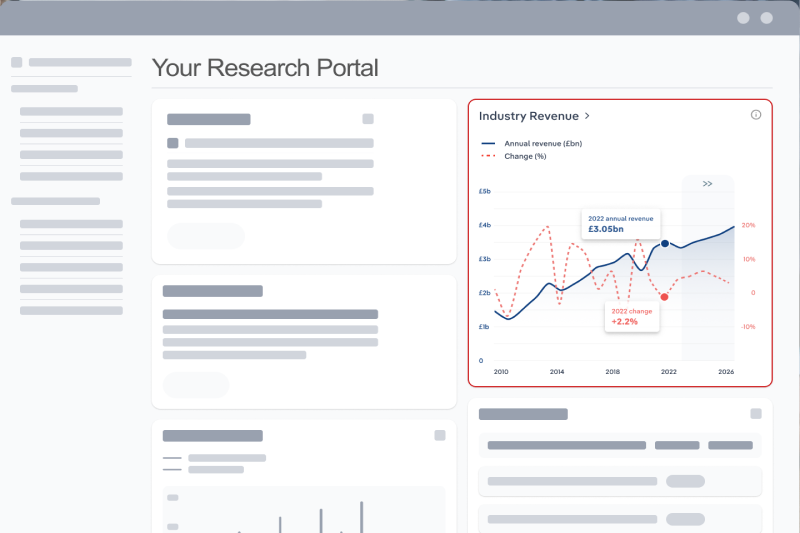
Streamline your workflow with IBISWorld’s intelligence built into your toolkit.
Explore industries with similar markets, supply chains, and economic drivers to gain broader context and insights.
When the stakes are high, you need intelligence that cuts through the noise—wherever you work.
The total merchandise imports and exports in Australia in 2026 was $1,015.4 billion.
The total merchandise imports and exports in Australia grew by 7.61% in 2026.
IBISWorld’s data and analysis on total merchandise imports and exports in Australia includes forecasted growth rates over the next five years.