
IBISWorld Platform
Answer any industry question in minutes with our entire database at your fingertips.

IBISWorld forecasts real GDP to increase by 1.6% in 2026-27, to $2.82 trillion. This sees growth falling below the Reserve Bank of Australia's (RBA) estimated potential growth rate of around 2%. The tempered GDP growth comes as growth was only recorded in 14 of the 19 industries measured by the ABS in the March 2026 quarter. Household consumption expenditure, the largest component of GDP, is expected to continue rising, but at a modest pace as higher interest rates and still-elevated inflation weigh on real disposable incomes, with Stage 3 tax cuts from July 2026 providing only partial support to real GDP growth. Corporate profits have been broadly flat in recent quarters, with a fall in mining-sector earnings offset by rising profits in several non-mining industries. Non-mining gross operating surplus has been supported by stronger conditions in construction, information media and telecommunications, wholesale trade and manufacturing, while mining profits have declined in line with lower prices and reduced export volumes for key commodities like iron ore and coal. Public demand has provided little impetus to growth, with higher public investment largely offset by weaker government consumption, leaving government expenditure close to neutral for overall GDP. Inflation remains above the RBA's 2-3% target band, eroding real wage growth and weighing on household purchasing power and the May 2026 cash-rate increase is expected to further restrain household spending and real GDP growth over the coming year. The unwinding of earlier energy rebates has also contributed to higher electricity prices and persistent cost-of-living pressures, reinforcing the risk that elevated inflation and tighter monetary policy will continue to act as a drag on real economic activity.In 2021-22, pent-up demand and the lifting of border closures and state-wide lockdowns drove sharp growth in real GDP as household spending and merchandise trade soared. Federal and state governments also announced infrastructure investments, including renewable energy projects that supported real GDP growth over the past five years. Surging immigration during 2021-22 and 2022-23 contributed to labour supply and consumer demand, ultimately boosting GDP growth, while elevated commodity prices boosted business profits during this period. However, a steep rise in inflation during the 2022 calendar year and a corresponding increase in interest rates have weighed on real GDP growth since 2022-23, especially as cost-of-living pressures led to consumer sentiment plummeting and to a slowdown in discretionary spending.Despite troubles in the domestic economy, especially in the construction sector, other segments of the economy performed strongly over much of the period. Export opportunities for agriculture and mining firms surged in 2021-22 and 2022-23 as rising global demand, elevated commodity prices and bumper harvests boosted the value of merchandise trade exports. Strong agricultural export volumes were supported by favourable rainfall, resulting in successive bumper crops, while high prices for commodities including wheat, coal and liquefied natural gas, driven largely by the Russia-Ukraine conflict, lifted export earnings. More recently, commodity prices have eased and agricultural production has returned to more typical levels, while adverse weather has softened mining production and exports. Business investment has become a larger contributor to GDP growth, particularly through substantial investment in data centres and other infrastructure. However, much of the equipment required for these projects is imported, increasing import volumes and causing net exports to weigh on economic growth. Overall, IBISWorld forecasts real GDP to grow at a compound annual rate of 2.0% over the five years through 2026-27.
Curious about what drives these trends? IBISWorld's analyst coverage on the real gdp growth includes detailled analysis on the current performance, outlook and industries affected.
1960-2034
This report analyses the real growth rate of Australia's gross domestic product (GDP). The data for this report is measured in financial years, sourced from the Australian Bureau of Statistics and measured in billions of seasonally adjusted 2023-24 dollars.
IBISWorld Industry Reports are available in multiple formats to fit seamlessly into your workflow.

Answer any industry question in minutes with our entire database at your fingertips.
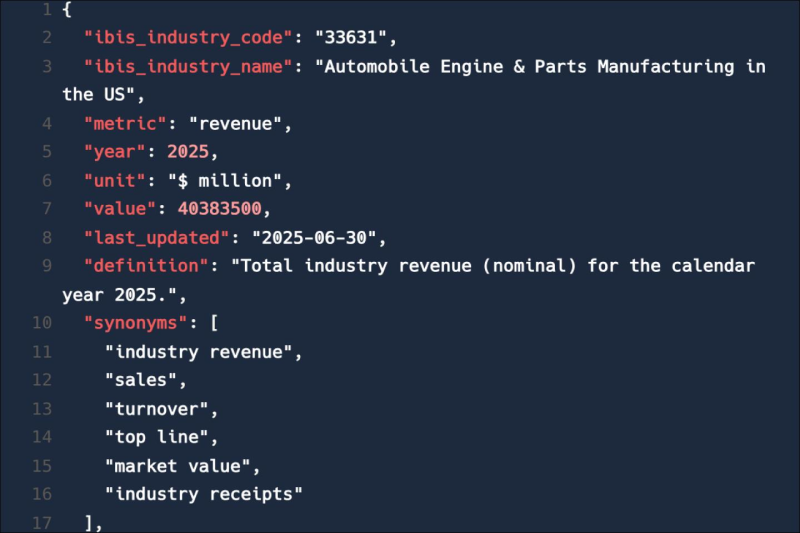
Feed trusted, human-driven industry intelligence straight into your platform.
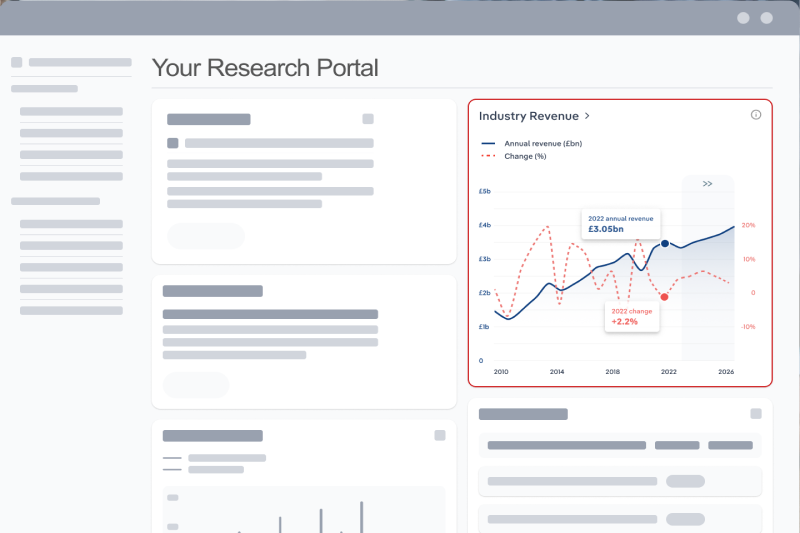
Streamline your workflow with IBISWorld’s intelligence built into your toolkit.
Explore industries with similar markets, supply chains, and economic drivers to gain broader context and insights.
| Industry | Country | Last 5-yr CAGR | Forecast 5-year CAGR | Revenue |
|---|---|---|---|---|
| Local Government Administration in Australia |

|
XX% | XX% | $XX |
| State Government Administration in Australia |
|
XX% | XX% | $XX |
| Defence in Australia |
|
XX% | XX% | $XX |
When the stakes are high, you need intelligence that cuts through the noise—wherever you work.
The real gdp growth in Australia in 2027 was $2,818.3 billion.
The real gdp growth in Australia grew by 2% in 2027.
IBISWorld’s data and analysis on real gdp growth in Australia includes forecasted growth rates over the next five years.