
IBISWorld Platform
Answer any industry question in minutes with our entire database at your fingertips.

IBISWorld forecasts the level of annual rainfall to decrease by 14.4% in 2026-27, to 498.4 millimetres. At the time of writing, no rainfall data is available for the current year. As weather patterns are very difficult to predict, estimated rainfall levels in the current year are set to the long-term average.Rainfall exhibits high volatility, with much of this coming from two global weather phenomena, La Niña and El Niño. El Niño is a weather phase that leads to above-average sea temperatures in the Pacific Ocean, creating warmer temperatures and reduced rainfall in Australia. La Niña is a weather phase that causes below-average sea temperatures in the Pacific Ocean, leading to wetter climate conditions in Australia. A La Niña weather phase often follows an El Niño weather phase. According to the BOM, below average rainfall for much of the southern, central and eastern Australia is likely between June and August 2026. However, above average rainfall is likely for parts of far north Australia.Australia's annual rainfall remained relatively high in 2021-22 following a La Niña weather pattern starting in the previous year. The ongoing weather pattern made November 2021 the wettest November on record and October 2022 the second-wettest October on record. Many parts of the country also suffered dry spells once rainfall eased. September 2023 was the driest September on record, with October 2023 the fourth driest October on record. Rainfall in January and June 2025 was the lowest in five and six years, respectively. Nevertheless, BOM reported that national rainfall reached 8.0% above average in calendar year 2025, totalling 503mm. This was in part because of Tropical Cyclones Fina and Hayley. Drier conditions and below average rainfall in 2026 are set to see a total rainfall drop for 2026-27. Overall, IBISWorld forecasts annual rainfall to decline at a compound annual rate of 0.4% over the five years through 2026-27.
Curious about what drives these trends? IBISWorld's analyst coverage on the level of annual rainfall includes detailled analysis on the current performance, outlook and industries affected.
1975-2034
This report analyses the level of annual rainfall in Australia. This is an average rate over the whole country, including desert areas. The data for this report is sourced from the Bureau of Meteorology (BOM) and is measured in millimetres per financial year.
IBISWorld Industry Reports are available in multiple formats to fit seamlessly into your workflow.

Answer any industry question in minutes with our entire database at your fingertips.
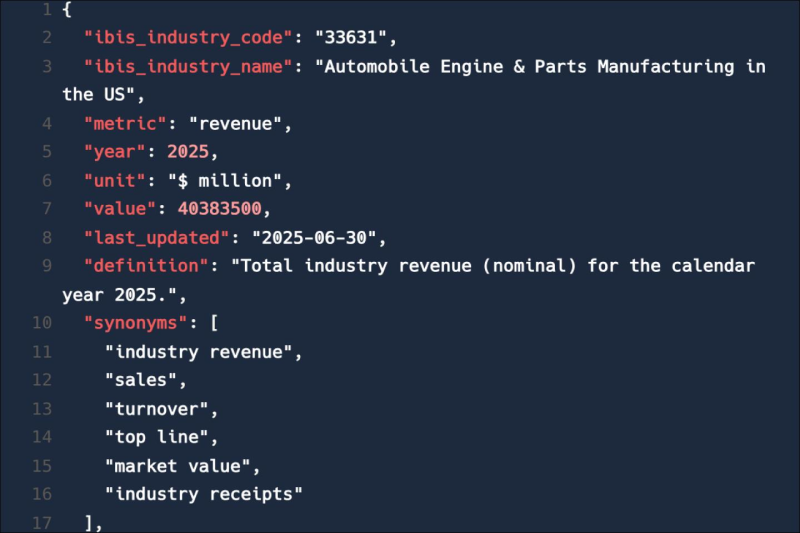
Feed trusted, human-driven industry intelligence straight into your platform.
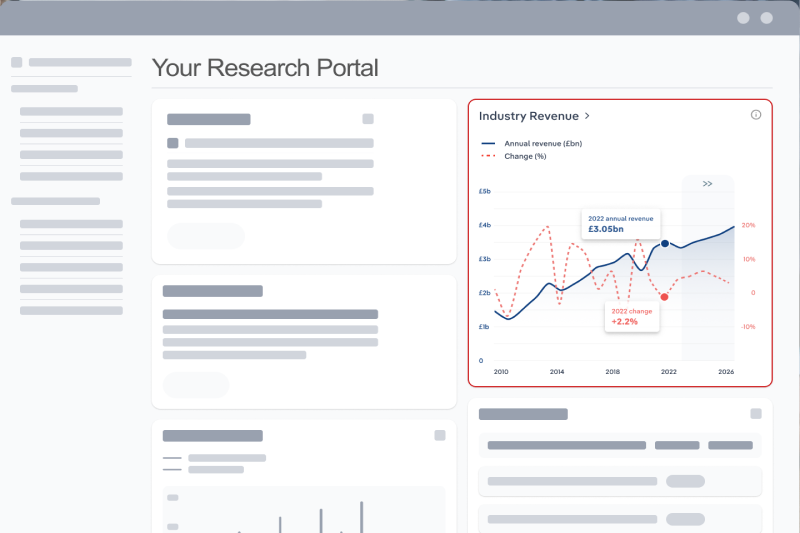
Streamline your workflow with IBISWorld’s intelligence built into your toolkit.
Explore industries with similar markets, supply chains, and economic drivers to gain broader context and insights.
When the stakes are high, you need intelligence that cuts through the noise—wherever you work.
The level of annual rainfall in Australia in 2027 was 498.7 millimetres.
The level of annual rainfall in Australia declined by -0.41% in 2027.
IBISWorld’s data and analysis on level of annual rainfall in Australia includes forecasted growth rates over the next five years.