
IBISWorld Platform
Answer any industry question in minutes with our entire database at your fingertips.

IBISWorld forecasts that the industrial production index will climb to 100.7 index points in 2025-26, up 1.5% from 2024-25. This growth has been driven by improvements in industry activity across the manufacturing, mining and EGWW sectors in the first half of 2025-26, due to softer industrial production in 2024-25. The mining sector in particular experienced robust growth thanks to strong production across key commodities like coal and iron ore. However, conflicts in the Middle East have propelled energy prices higher, raising manufacturers' uncertainty about input costs and supply chain reliability. Energy-intensive manufacturing industries like chemicals, metals processing and cement production could face further margin compression and curtail output. These factors will likely dull Australia's industrial production index in the second half of 2025-26, limiting its expansion this year.Strong demand for manufactured goods has resulted from the reorganisation of supply chains since 2020-21 in response to global supply chain risks exposed by the pandemic. While inexpensive imports from Asia, along with offshoring, have weighed on manufacturing output and employment since the late 1980s, there has been some reshoring activity over the past five years for some advanced manufacturing industries like pharmaceuticals and renewable energy technology. Nonetheless, climbing natural gas and electricity wholesale prices since 2020-21 have dampened the growth of manufacturing output from reshoring, with former major plastics manufacturer Qenos and former architectural glass product manufacturer Oceania Glass falling into insolvency between 2023-24 and 2024-25 primarily because of high-energy costs. Elevated energy prices have pressured Australia's industrial production index over the past five years.EGWW (Electricity, Gas, Water and Waste services) industry activity has expanded since 2021, mainly due to rapid growth in renewables. Massive investment in solar, wind and batteries has driven Australia's clean energy transition, boosting electricity generation, supporting grid upgrades and reducing emissions, alongside rising demand from population growth. Furthermore, large circular economies initiatives since 2020-21, like the upgrade of Visy's Gibson Island Material Recovery Facility in 2023, have bolstered EGWW activity. Emerging sectors like the data-centre buildout in Australia have also lifted energy and water demand.The Mining sector's industrial production index has fallen steadily from 2020-21 to 2025-26. Weaker demand from China, Australia's main mineral export partner, and declining global commodity prices for key metals have put pressure on the mining sector. Policy, investor and lender pressure on emissions has also constrained new thermal-coal investment, as Australia has made stronger efforts to shift towards renewable energy sources. Still, a robust late-2025 rally in metal prices, including gold and copper, has helped offset these headwinds.The decline of mining has limited the positive effects from rising demand from manufacturing and EGWW activity. That's why the index has remained fairly stable over the past five years. Overall, IBISWorld forecasts the industrial production index to inch upwards by an annualised 0.1% over the five years through to 2025-26.
Curious about what drives these trends? IBISWorld's analyst coverage on the industrial production includes detailled analysis on the current performance, outlook and industries affected.
1975-2033
This report analyses the total value of industrial production in Australia. This includes manufacturing; electricity, gas, water and waste services (EGWW); and mining, excluding exploration and mining support services. The data for this report is sourced from the Australian Bureau of Statistics and is an index with a base year of 2023-24.
IBISWorld Industry Reports are available in multiple formats to fit seamlessly into your workflow.

Answer any industry question in minutes with our entire database at your fingertips.
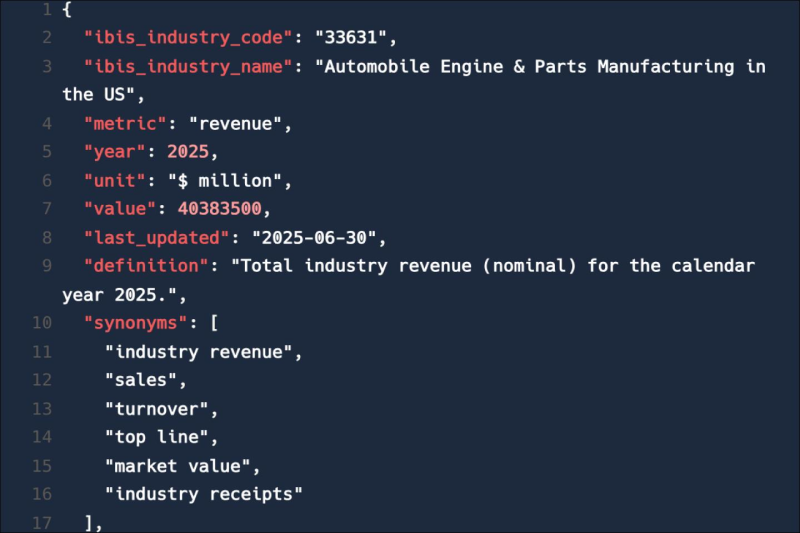
Feed trusted, human-driven industry intelligence straight into your platform.
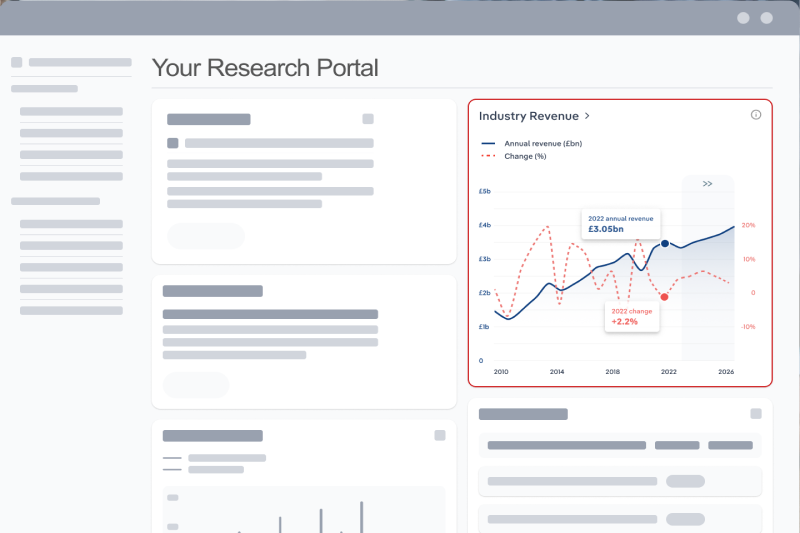
Streamline your workflow with IBISWorld’s intelligence built into your toolkit.
Explore industries with similar markets, supply chains, and economic drivers to gain broader context and insights.
| Industry | Country | Last 5-yr CAGR | Forecast 5-year CAGR | Revenue |
|---|---|---|---|---|
| Industrial Gas Production in Australia |

|
XX% | XX% | $XX |
| Electricity Transmission in Australia |
|
XX% | XX% | $XX |
| Hydro-Electricity Generation in Australia |
|
XX% | XX% | $XX |
| Environmental Consulting in Australia |
|
XX% | XX% | $XX |
| Electricity Infrastructure Construction in Australia |
|
XX% | XX% | $XX |
| Hardware Wholesaling in Australia |
|
XX% | XX% | $XX |
When the stakes are high, you need intelligence that cuts through the noise—wherever you work.
The industrial production in Australia in 2026 was 100.7 index points.
The industrial production in Australia grew by 0.1% in 2026.
IBISWorld’s data and analysis on industrial production in Australia includes forecasted growth rates over the next five years.