
IBISWorld Platform
Answer any industry question in minutes with our entire database at your fingertips.

IBISWorld forecasts capital expenditure on defence to be $15.7 billion in 2026-27, representing a minor 0.6% fall relative to the previous year. The Federal Budget 2026-27 paves the way for significant growth in defence capital expenditure, driven by several factors. The "Future Made in Australia Agenda" is leading this growth by prioritising investment in cutting-edge defence technologies. These advanced products and systems require substantial capital for development and acquisition. Additionally, the budget reflects the government's commitment to modernising the Australian Defence Force (ADF) as outlined in the 2025 National Defence Strategy. The new strategy lifts total funding by $53 billion over ten years and keeps the decade-long capital ramp-up on track. In March 2025, this was updated to $57.6 billion, with $1 billion brought forwards in 2025-26 to accelerate delivery of near-term, priority capabilities, as upgrading existing equipment and acquiring new capabilities necessitate a significant capital injection. Rising global tensions, like the Russia-Ukraine and Iran-Israel-US conflicts, have had an outsized influence on budget allocation, with the government prioritising national security through increased defence spending. Inflationary pressures are also a major factor in spending. The rising costs of materials, labour and logistics mean that previous budget allocations no longer go as far as they did, necessitating greater capital expenditure to achieve the outlined goals.In recent years, capital expenditure on defence has trended upwards, driven by government policy. Significant investments through the Integrated Investment Program and the 2016 Defence White Paper supported capital expenditure. The Australian Air Force's fighter fleet upgrade, with the acquisition of the F-35A aircraft, also injected capital expenditure into defence over the past decade. In August 2019, Project GREYFIN's first stage, intending to invest over $3 billion in new equipment and training over the next two decades, commenced. The first stage included $500 million to be spent over four years on new weapons, body armour and other equipment for Australia's eight special forces units.In 2022-23, spending priorities shifted following the signing of the AUKUS pact and the election of a new administration. The defence partnership introduced a series of long-term obligations, prompting adjustments to short-term funding settings. The incoming government argued that its predecessor had over-committed to certain defence programs, noting that many projects required more realistic funding. As a result, several initiatives were identified for scaling back or cancellation, including reduced plans for infantry fighting vehicles and the complete removal of commitments to acquire 30 self-propelled howitzer guns. The review also redirected investment towards programs better aligned with a changing global security landscape, such as cybersecurity, artificial intelligence and quantum computing.As policy priorities have shifted under the 2025 National Defence Strategy, capital expenditure on defence equipment and machinery has risen as a share of total expenditure on defence. Overall, IBISWorld forecasts capital expenditure on defence to expand at an annualised 4.2% over the five years through the end of 2026-27.
Curious about what drives these trends? IBISWorld's analyst coverage on the capital expenditure on defence includes detailled analysis on the current performance, outlook and industries affected.
1973-2034
This report analyses the Federal Government's total capital expenditure on national defence. This includes investment in durable military equipment like ships, aircraft and weapons platforms and outlays on construction projects only used for military purposes. Non-capital consumable items like ammunition and missiles are excluded from this expenditure. The Australian Bureau of Statistics is the source for this report, which is measured in billions of seasonally adjusted 2023-24 dollars that have been deflated using chain volume measures. Data is presented as end of financial year totals.
IBISWorld Industry Reports are available in multiple formats to fit seamlessly into your workflow.

Answer any industry question in minutes with our entire database at your fingertips.
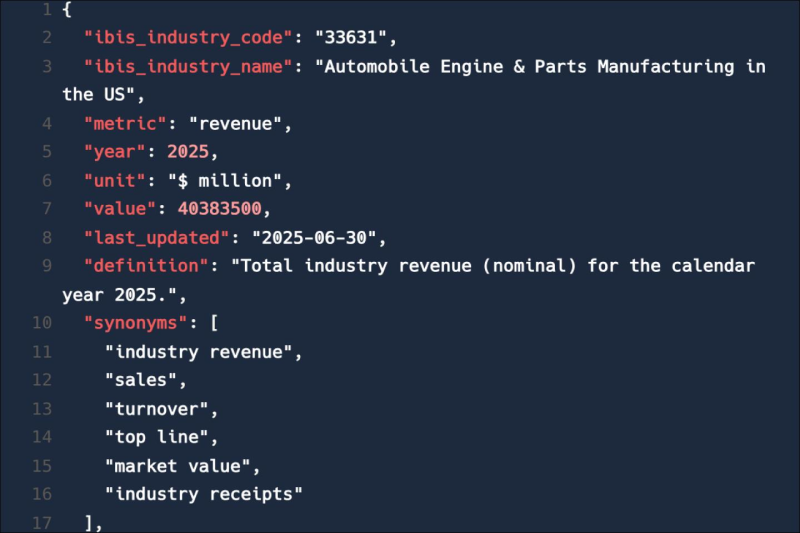
Feed trusted, human-driven industry intelligence straight into your platform.
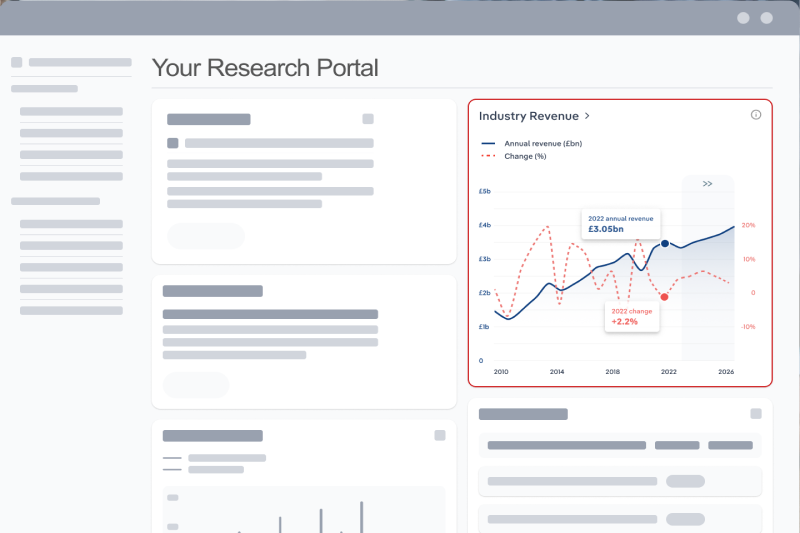
Streamline your workflow with IBISWorld’s intelligence built into your toolkit.
Explore industries with similar markets, supply chains, and economic drivers to gain broader context and insights.
| Industry | Country | Last 5-yr CAGR | Forecast 5-year CAGR | Revenue |
|---|---|---|---|---|
| Defence in Australia |

|
XX% | XX% | $XX |
| Shipbuilding & Repair Services in Australia |
|
XX% | XX% | $XX |
| Aircraft Manufacturing & Repair Services in Australia |
|
XX% | XX% | $XX |
| Satellite Communications & Astronautics in Australia |
|
XX% | XX% | $XX |
| Audiovisual Electronic Equipment Manufacturing in Australia |
|
XX% | XX% | $XX |
When the stakes are high, you need intelligence that cuts through the noise—wherever you work.
The capital expenditure on defence in Australia in 2027 was $15.7 billion.
The capital expenditure on defence in Australia grew by 4.17% in 2027.
IBISWorld’s data and analysis on capital expenditure on defence in Australia includes forecasted growth rates over the next five years.